
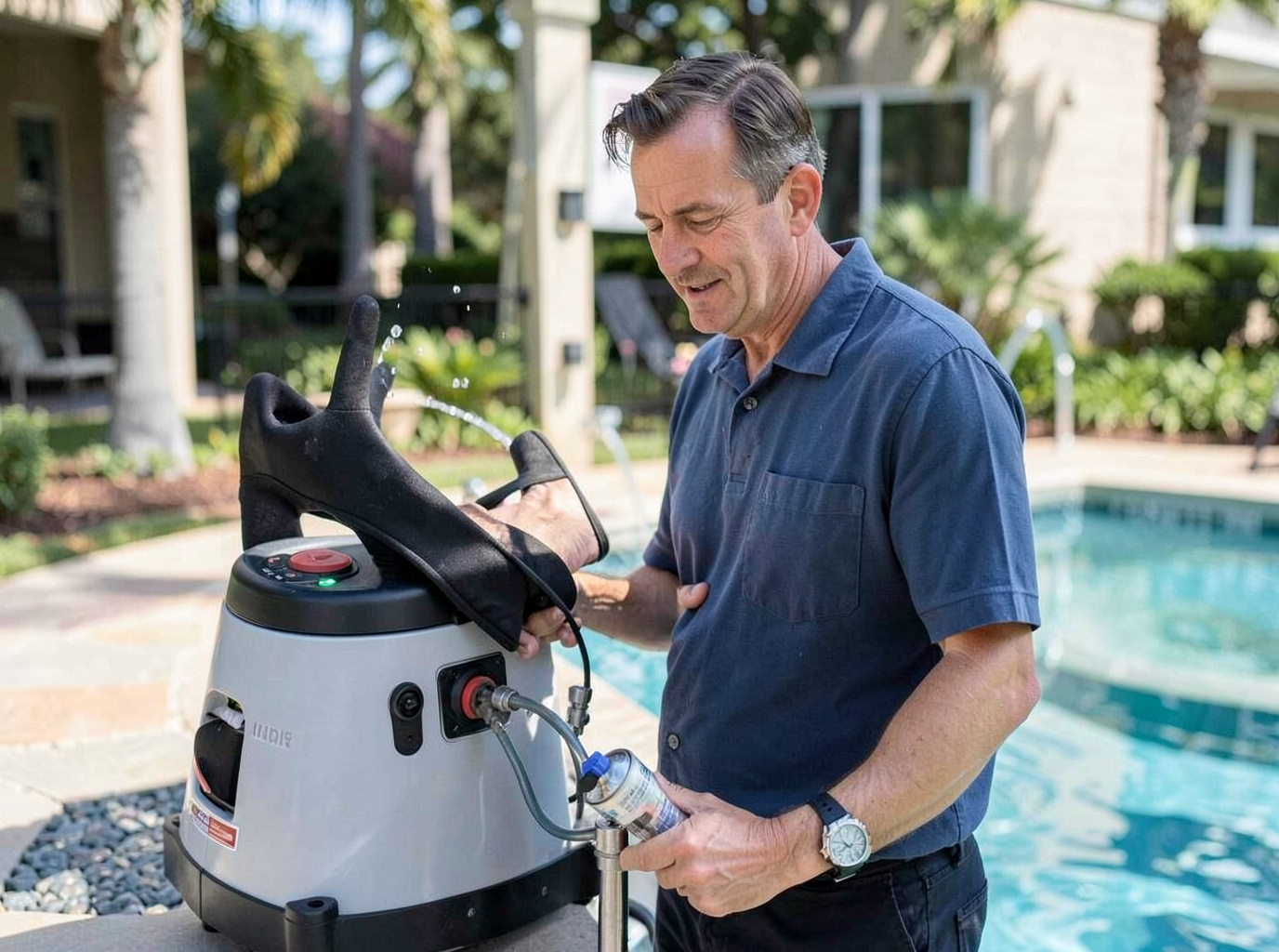
In Lake County homes, especially older stock around the Clermont Historic District, pool timers often fail from moisture intrusion during hot summers and mild winters. The humid subtropical conditions accelerate corrosion on contact points and motor windings inside mechanical and digital units mounted near the equipment pad. We check voltage at the timer terminals first, then inspect the clock motor and trippers for binding caused by salt air or sprinkler overspray common near Lake Louisa State Park.
Wiring runs in Lake Highlands frequently show degraded insulation from years of UV exposure and ground settling around pool decks. When a timer stops switching the pump, we test for proper 240-volt supply and confirm the time clock is not stuck in manual override before replacing the entire mechanism. Code requires GFCI protection on all pool circuits, so we verify the breaker and bonding wire remain intact during every service call.
Homeowners in neighborhoods near Citrus Tower sometimes report the pump running continuously after a storm because lightning surges damage the timer relay. We isolate the timer from the main panel and use a multimeter to confirm whether the issue is the clock motor, the switch, or downstream wiring to the pump. Replacement units are chosen for weatherproof enclosures rated for outdoor use in Florida conditions.
Service calls to properties near Clermont Waterfront Park often involve timers mounted too close to the water line, allowing splash and condensation to short the terminals. We relocate the enclosure when possible and install a new digital timer with battery backup so schedules survive brief power interruptions common in the area.
Technician insight
In Clermont the thing that catches most people out with Pool Timer Not Turning Pump On or Off is the constant humidity and occasional sprinkler overspray around pads in Lake Highlands and near Lake Louisa State Park. The moisture gets inside the enclosure and corrodes the contacts long before the clock motor actually fails, so homeowners keep resetting breakers instead of replacing the timer.
Timer failure after summer storms
A homeowner in Lake Highlands reported the pump running nonstop after heavy rain. We found water inside the timer enclosure had corroded the relay contacts. We replaced the unit with a weatherproof digital model, re-terminated the bonding wire, and confirmed proper on-off cycles.
Pool Timer Not Turning Pump on or Off Services We Offer
✓Mechanical Timer Replacement
Swap worn clock motors and trippers that no longer advance or trip the pump circuit on schedule.
✓Digital Timer Upgrade
Install programmable digital controls with battery backup to replace failing mechanical units in humid Lake County installations.
✓Timer Wiring Diagnostics
Trace and repair corroded or damaged conductors between the timer and pump motor common in older Downtown Clermont homes.
✓GFCI Breaker Integration
Add or replace GFCI protection required for pool equipment circuits while correcting timer switching faults.
✓Pump Start Relay Repair
Service or replace the relay inside the timer that engages the pump when the clock reaches the on position.
Pool Timer Not Turning Pump on or Off Cost in Clermont, FL
| Service | Typical Range | What Affects It |
|---|---|---|
| Mechanical timer replacement | $175–$325 | Price varies with enclosure condition and whether bonding wire needs re-termination. |
| Digital timer upgrade | $275–$450 | Higher end includes surge protection and battery backup models. |
| Wiring repair at timer | $150–$300 | Depends on length of conductor that must be replaced and access to conduit. |
| Full timer and relay service | $225–$400 | Covers relay replacement plus clock motor in one visit. |
Ranges are typical for Clermont, FL and confirmed with an exact written quote before any work starts.
How it works
- 1
Initial Voltage and Function Test
We arrive at the equipment pad, confirm 240-volt supply at the timer, and observe whether the clock advances and the contacts close.
- 2
Component Isolation
We disconnect the timer from the circuit and test the clock motor, trippers, and relay separately to pinpoint the failure.
- 3
Repair or Replacement
We replace the faulty timer mechanism or repair wiring, then reinstall and program the new unit for the homeowner's schedule.
- 4
Final Verification
We run the pump through multiple on and off cycles and confirm GFCI protection remains functional before leaving the property.
Pricing
Most timer repairs fall between $175 and $550 depending on parts needed and whether wiring must be traced.