
2026-09-19 · Rick Donovan
Horizon West
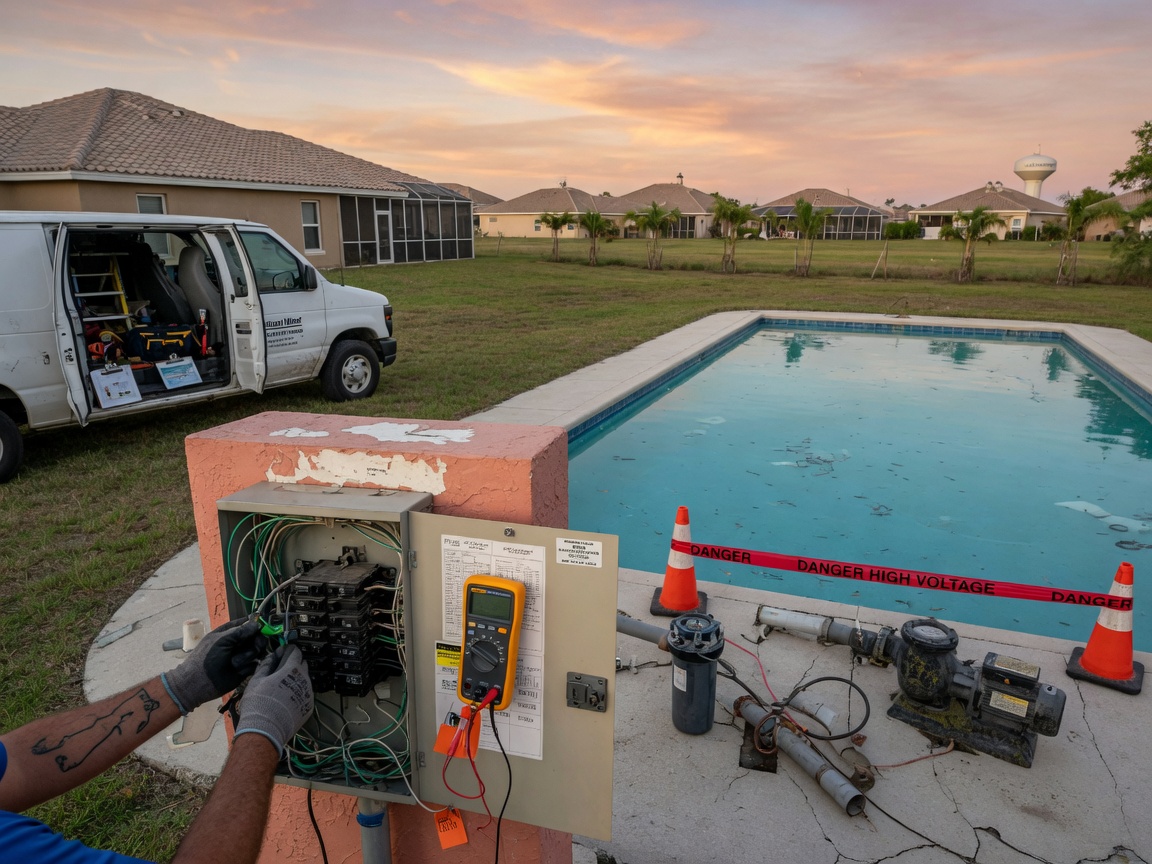
Horizon West pool electrical repair centers on addressing lightning-induced surges and moisture intrusion common to the area's master-planned communities west of Clermont. Newer homes here use extensive automation and 220-volt equipment runs that fail faster after summer storms than systems in the Clermont Historic District or Lake Highlands.
Storm Damage Patterns in Horizon West
Heavy afternoon thunderstorms roll through Lake County several times weekly from June into September, sending water into conduit and tripping GFCI breakers on pool equipment pads. Horizon West lots often sit on sandy fill with poor drainage, so water pools near transformers and subpanels more than in the rolling terrain around Lake Louisa State Park. Technicians see repeated calls for pool equipment lost power after rain or storm because underground feeders corrode at splices within three to five years. Checking bonding wires at the equipment pad and light niches prevents stray voltage after each event. Residents along the Horizon West corridor between Winter Garden and Clermont report more automation module failures than properties in Leesburg because the newer control panels sit closer to grade and collect splash from deck cleaning.
Wiring and Equipment Differences in Newer Builds
Homes built after 2015 in Horizon West typically feature 1.5- to 3-horsepower variable-speed pumps wired through dedicated 30- or 40-amp breakers and smart timers mounted on the side of the house. These runs travel longer distances than in older Downtown Clermont properties, increasing voltage drop and heat at connections. Pool light electrical repair calls spike when LED fixtures short after water enters the niche during heavy rain. The same humid subtropical conditions that keep winters mild also promote corrosion on timer contacts and relay boards inside automation enclosures. Checking torque on lugs and replacing non-waterproof junction boxes cuts repeat service visits. Homeowners near the Reserve at Lost Lake and Palisades subdivisions notice pool pumps keeps tripping breaker symptoms sooner than expected because the equipment pads sit in full sun and the breakers derate faster in 95-degree heat.
Troubleshooting Steps After Power Loss
Start by verifying 240-volt supply at the subpanel with a multimeter before resetting any breaker. Next inspect the GFCI outlet or breaker for moisture or a tripped indicator, then test the line and load sides separately. If the pool pump has no power or won't turn on after a storm, examine the underground conduit for water intrusion at the 90-degree sweeps near the pad. Document voltage readings at the motor terminals under load to rule out undersized wire. When the pool timer not turning pump on or off occurs, bypass the timer contacts temporarily to isolate whether the issue is the clock motor or the relay. These steps help distinguish between a simple breaker reset and a full pool equipment wiring repair that requires trenching new conduit.
Maintenance Practices for Long-Term Reliability
Schedule an annual inspection each spring before the rainy season to tighten connections and replace any cracked conduit or wet-rated covers. Keep the equipment pad clear of mulch and irrigation spray to reduce corrosion on grounding lugs. In Horizon West, where many pools serve vacation rentals, documenting these checks protects property managers from liability after a guest reports a shock hazard. Linking service records to the address at 13202 Olesen Ct helps track recurring issues across multiple properties. For detailed guidance on related neighborhoods, see the Four Corners post or the Montverde article that covers similar soil and storm conditions.
When to Call for Targeted Repairs
Persistent GFCI keeps tripping or pool light keeps tripping GFCI after multiple resets points to damaged cord or fixture seals that require pool light electrical repair rather than repeated breaker replacement. If the pool automation system not controlling equipment persists after power restoration, the control board likely needs replacement due to surge damage. These targeted fixes restore operation faster than full system overhauls and keep costs predictable for Horizon West residents.